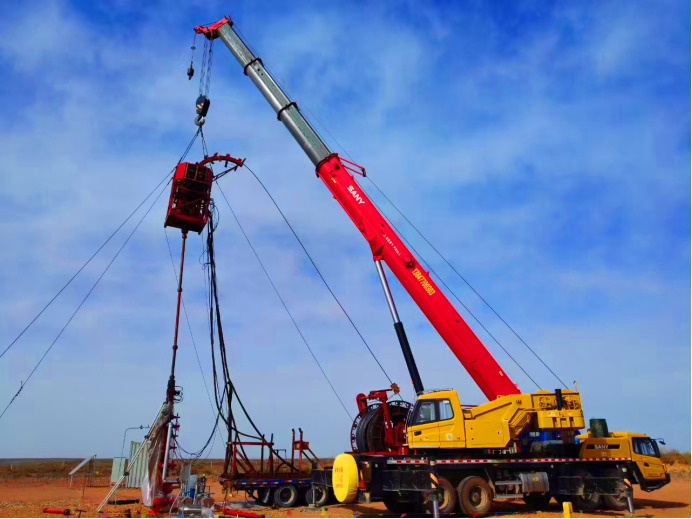
The 4,100-meter deep well tested this time not only set a new record for the company's coiled tubing operations in terms of depth but also faced severe challenges posed by high-pressure gas reservoirs. The bottom-hole pressure far exceeded that of conventional gas wells, imposing extremely high requirements on the gas tightness during operations. Once the seal fails, well control risks are likely to occur, making it regarded as a "technical assault under dual tests" in the industry. As the first practical application of the company's coiled tubing technology in gas well testing, the team conducted advanced technical research and developed a tailor-made construction plan based on the characteristics of Ordos' low-temperature winter climate and high-pressure gas reservoirs.
To address the problem of gas tightness under high pressure, the technical team repeatedly optimized the string combination and seal structure, selected high-pressure resistant sealing materials, and conducted multiple seal tests by simulating the downhole high-pressure environment, ultimately forming a reliable high-pressure sealing operation process. Meanwhile, in response to the extreme cold of -18℃, the team adopted a dual "cold prevention + thermal insulation" protection for key components such as coiled tubing joints, control valves, and sealing elements, and equipped with low-temperature adaptive hydraulic systems and electronic monitoring equipment. This ensured the stable operation of equipment in low-temperature environments and avoided issues such as gas path freezing and seal brittleness.
During the construction period, with piercing cold winds on the plateau, the operating personnel stood firm at their posts against the low temperature, conducting wellhead operations, pressure monitoring, and data recording in 24-hour shifts. Faced with real-time pressure fluctuations caused by the high-pressure gas reservoir, technical and construction personnel collaborated efficiently, accurately regulating the running speed of coiled tubing and sealing pressure, and monitoring downhole conditions throughout the process. They successfully controlled the gas tightness performance within the optimal range, ensuring the entire testing operation was safe, controllable, and the data was accurate and reliable.
The success of this operation not only verified the adaptability and reliability of the company's coiled tubing technology under the triple complex environments of ultra-deep wells, high pressure, and extreme cold but also filled the technical gap of the company in the field of coiled tubing testing for high-pressure gas wells. It accumulated valuable experience for the subsequent development of unconventional oil and gas development markets. The client fully affirmed the professional quality, tackling ability, and safety control level demonstrated by the operation team, believing that this test provided important technical reference for the exploration and development of deep high-pressure gas reservoirs in the region.
Next, the company will summarize the successful experience of deep well testing under extreme cold and high-pressure environments, continue to deepen the application research of coiled tubing technology in complex oil and gas reservoirs, and constantly improve the technical system and operation process. It will provide more solid technical support for the efficient exploration and development of oil and gas resources in China and bravely climb new technical peaks in the journey of energy supply guarantee.